THE GLOBAL TOMATO OUTLOOK: KEY TAKEAWAYS FROM THE 2026 FRUITNET TOMATO CONGRESS IN MOTRIL
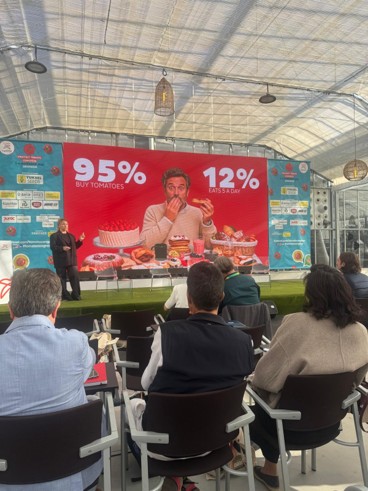
The European and global tomato sector is undergoing a profound transformation. Discussions among key supply chain stakeholders at the 2026 Fruitnet Tomato Congress in Motril, Spain , highlighted crucial insights that are redefining commercial and production strategies for the coming months.
Market Dynamics, Energy Costs, and Labor Shortages
Global geopolitical tensions, climate pressures and labor shortages continue to stimulate a radical overhaul of supply chains. Coupled with this is the persistent impact of rising energy costs, which demands rigorous management of heated greenhouses and production cycles. The sector is moving to ensure operational continuity through two distinct and complementary pillars:
- Supply chain resilience: Defined as the inherent capacity of the production and distribution system to absorb and overcome sudden climatic. phytosanitary, or geopolitical shocks while maintaining operational stability and safeguarding quality and corporate profitability.
- Diversification of sourcing basins: The commercial and logistics strategy aimed at expanding and distributing production origins and supply flows, thereby reducing dependence on a single geographic area and ensuring cost efficiency and commercial continuity through long-term alliances between producers, cooperatives, and retailers.
- Consumption Trends and Segmentation
Purchasing behavior analyses confirm that modern consumers look for value, but above all, for a consistent and superior taste experience. Brands focused on quality and flavor (as highlighted by market analyses presented by leading industry figures) demonstrate that segmentation towards premium and snack categories represents the main engine for attracting new generations and creating new consumption occasions.
Varietal Innovation, Resilience, and Labor-Saving Breeding
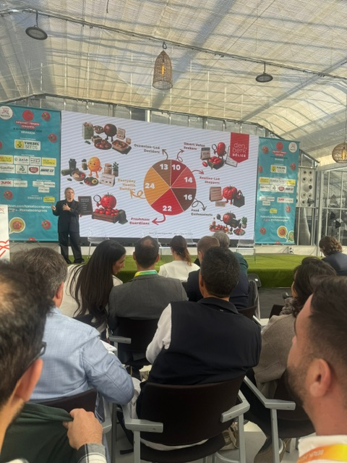
Plant breeding confirms itself as the primary response to major phytosanitary, climatic, and structural challenges. Seed companies and breeders are decidedly steering breeding programs toward overall plant resilience and the development of varieties that require less labor input (such as plant architectures that simplify canopy management, ease of harvesting, and uniform ripening). This goes hand in hand with tolerance to major viruses (such as ToBRFV), excellent agronomic performance, stable productivity, and extended shelf life, without ever compromising organoleptic characteristics.
Sustainability and Water Resources
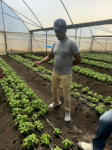
Efficient resource management first and foremost water and accurate measurement of the carbon footprint are no longer mere options, but fundamental requirements demanded by international markets and regulations. Field technical visits showed how cooperation and the adoption of circular economy models are pioneering increasingly sustainable and transparent agriculture.
Automation, Robotics, and Predictive Logistics
To counteract growing labor shortages and boost operational efficiency, automation, robotics, and advanced vision systems are rapidly reshaping greenhouse operations, post-harvest management, and logistics. From robotic solutions for harvesting and crop maintenance to the strategic transit ports of the Andalusian region, the integration of predictive tools for yield forecasting and demand planning helps reduce waste and optimize global commercial flows.
Sources: Presentations and market scenario data from RaboResearch / Rabobank, FAO, Freshtrategy, producer organizations (Granada La Palma), seed companies, and international fresh produce groups (Den Berk Délice, Looije, Azura Group) participating in the Fruitnet Tomato Congress in Motril.
News