The SAIS Laboratory: Seed Quality Under the Lens
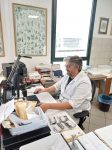
The SAIS laboratory is a key hub in the seed supply chain: every batch that enters or leaves our company passes through here, and there is only one key word: quality. Every year, we conduct thousands of purity and germination tests to ensure that every batch reaches the customer with the promised quality. We take care of every aspect of the seed, starting with purity, which must meet rigorous standards.
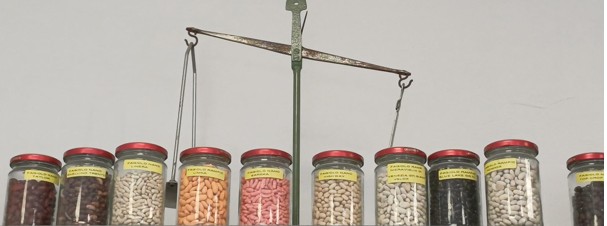
The path of a batch
All incoming and outgoing batches are tested to ensure maximum precision.
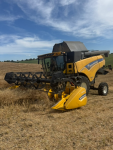
When crops are delivered from the fields, once the production cycle is complete, we examine them immediately and carefully record their content, from inert materials to the weeds in each batch.
These data are transmitted to the sorting department, which begins the cleaning process already knowing which weeds have to be removed. During the sorting process, the laboratory is called upon to monitor the progress of the cleaning process and to report whether the batch has met the required standards.
Finally, we test a representative sample of the batch to verify its suitability for sale. Only after passing this step, a batch can be approved for sales.
Purity analysis
To asses purity, we refer to ISTA (International Seed Testing Association) methods, which are standardized procedures that guarantee the reproducibility of results in laboratories worldwide.
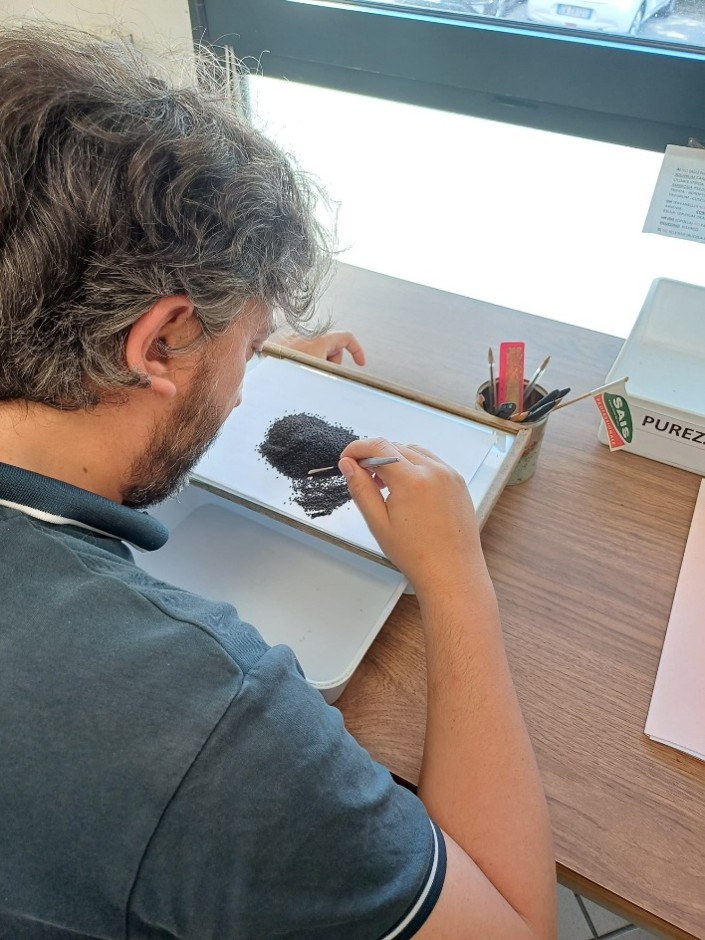
The analysis is performed on a seed sample whose weight varies depending on the species: the larger the seed, the greater the sample weight required. For example, for purity assessments, we analyze 5 g of Cichorium intybus and 30 g of Raphanus sativus.
The test yields three fractions expressed as percentages: pure seed, weed seed, and inert material. The pure seed must strictly meet a minimum threshold, which varies by species and sales region. Our goal is a purity level close to 100%.
The purity analysis is performed in one working day, so that batches does not remain on hold while awaiting for purity results.
Determination of Other Seeds (OSD)
SAIS sells worldwide, including in particularly demanding markets such as Brazil and Australia. Each country has its own regulations, with specific purity limits and a list of prohibited weeds.
The laboratory plays a key role in the allocation of the batches by checking the absence of all noxious weeds prohibited in the destination country.
We perform hundreds of OSD tests, always in accordance with ISTA regulations, which specify the seed quanties to be tested for each species.
This analysis concerns only the presence weed seeds and the quantities of seeds to be assessed are larger than those necessary for purity tests.
For example, OSD analysis is carried on a 100 g seed sample for Brassica oleracea and 500 g seed sample for Beta vulgaris.
The critical point is the identification of the weed species. Some are botanically related to the cultivated species and their seeds that are very similar in appearance and color: this is where the analysts’ experience makes all the difference.
The seed of Sinapis arvensis, for example, is very similar to that of Brassica rapa in shape, size, and color. Fallopia convolvulus seeds are also difficult to be spotted among Allium cepa seeds as they look very similar. It takes a well-trained eye to detect rthem.
Even if a batch has already been tested and approved for sales, we repeat the analysis on a sample before packing our orders to ensure the quality of the seed the customer will receive
Germination
In addition to purity and OSD analyses, the laboratory conducts germination tests: every batch, both incoming and outgoing, is tested to determine the percentage of seeds that will germinate. Even for germination tests we coply with ISTA guidelines, which specify the most suitable conditions of germination for each species:
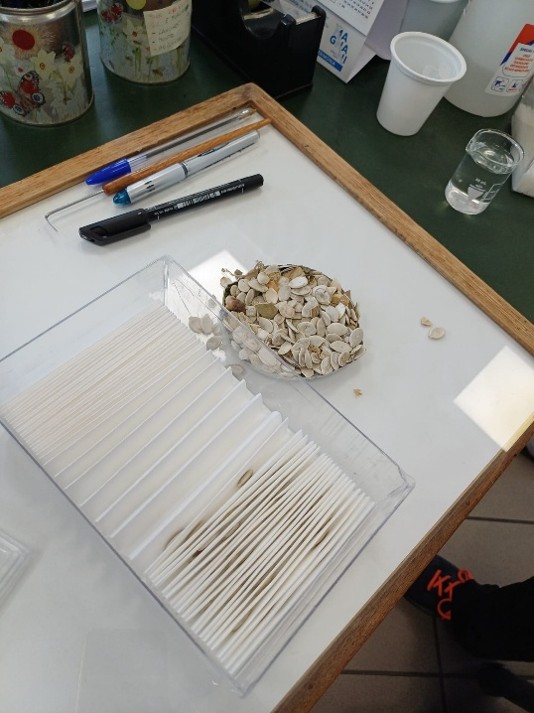
- Substrate: paper (TP) or sand (S). Brassica rapa, for example, performs best on paper, while Pisum sativum is sown in sand.
- Temperature: a constant 20 °C or a day-night cycle between 20 and 30 °C, as Solanum lycopersicum seeds prefer.
- Light: Our germination cabinets allow us to adjust both the temperature and the day-night cycle.
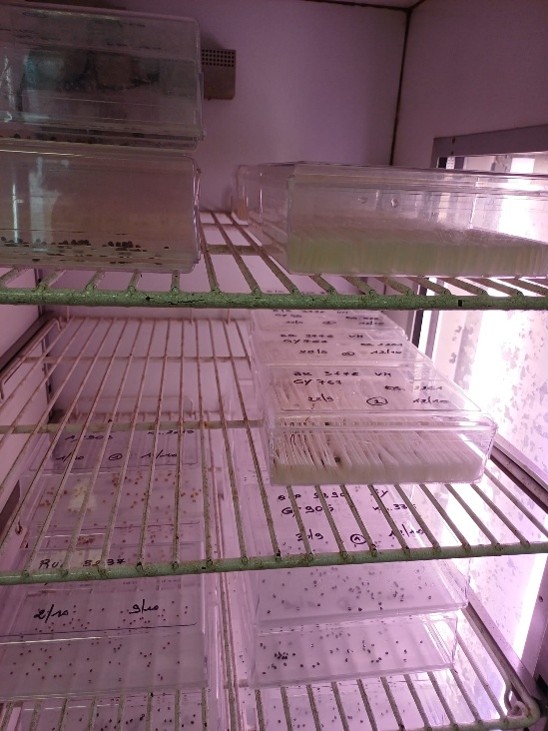
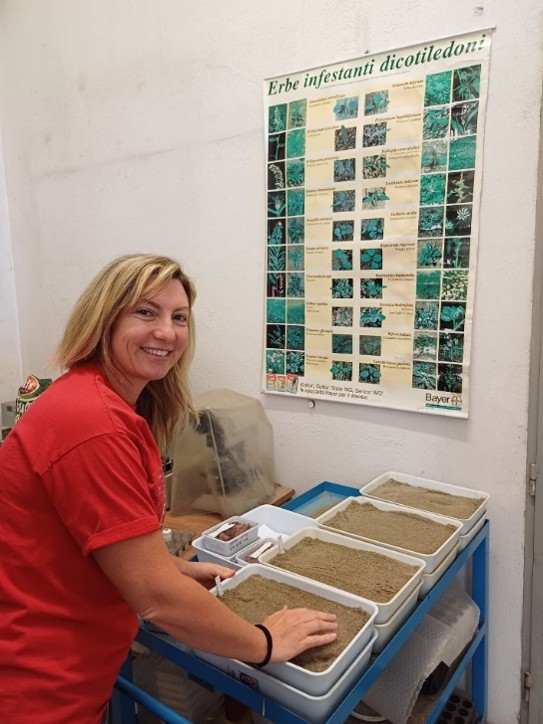
- Humidity: ISTA rules specify a low, medium or high level of humidity for each species. We have developed an in-house protocol that, through dedicated testing, quantifies the exact amount of water to be added to each germination tray based on species and substrate.
The analysis is performed on 100 seeds in 4 trays to minimize external variables. The germination trays remain in the cabinets for a number of days that depends on the species: germination is assessed, for example, after 10 days for Brassica oleracea and after 21 days for Anethum graveolens. Response times therefore depend on the species.
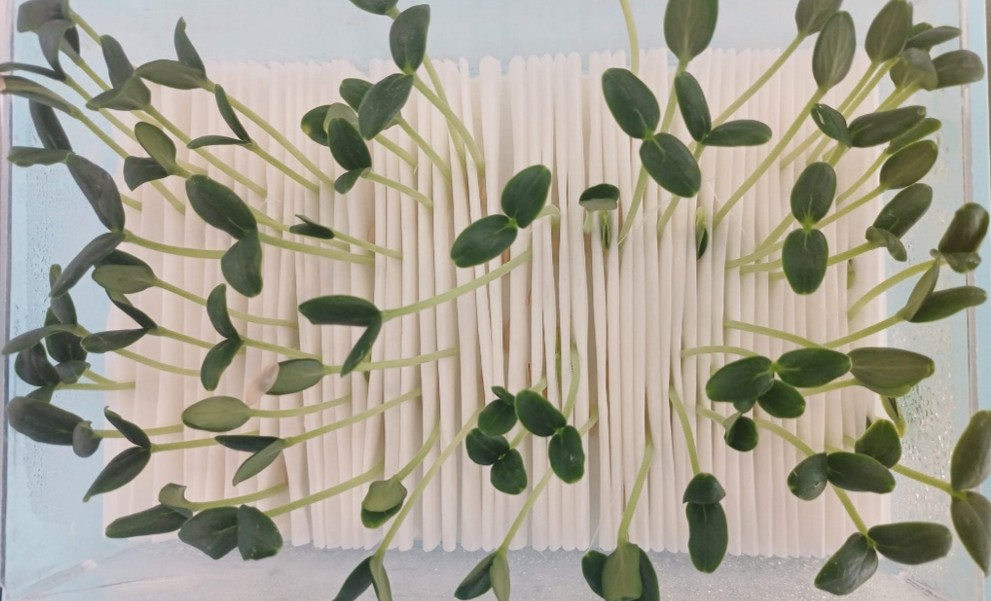
Counting is a delicate process in which the analyst’s experience is crucial. The number of healthy germinated seeds is counted: sometimes a seed gives rise to an incomplete or unhealthy seedling, which lowers the result. The final figure is the average of the four replicates, expressed as a percentage of healthy germinated seeds, accompanied by a second number: the percentage of seeds that germinated but were abnormal.
The identification of abnormal seedlings also follows rules strictly codified by ISTA. Each species has its own typical abnormalities, often divided into subcategories: seedlings without a root system, without an aerial system, or with an incomplete aerial system. Another cause of abnormalities is primary fungal infections—that is, those already present in the seed.
When the seed “sleeps”
Sometimes a batch yields a low germination rate because the seed is dormant—a biological mechanism that inhibits germination. This can be overcome in various ways, depending on the species.
The most common type of dormancy is physiological and can be easily overcome with a cold treatment: often, a couple of days at 4 °C is sufficient. In more stubborn cases, the treatment period is extended. Other forms of dormancy are overcome with chemical treatments, such as KNO₃ (potassium nitrate) or GA (gibberellic acid).
How Often Do We Test?
We perform germination tests on all incoming lots and on all lots that have undergone processing or treatment. Subsequently, each lot is retested periodically, every 3–4 months, to maintain high quality and ensure that our customers receive seeds that meet high standards.
A Laboratory That’s Constantly Up to Date
Last but not least: the SAIS laboratory works closely with external laboratories, such as CREA and the University of Bologna, to ensure its analysts maintain the highest level of expertise. Because the quality of the seed that reaches our customers begins right here.
News